Research updates
A book goes out of date the day it is printed. This is how I keep it current: new colorectal cancer research, read, filtered and written up in plain language.
How these are chosen
Every week I search Europe PMC, which covers PubMed and the medRxiv preprint server in one index, across the topics the book is built on: recurrence prevention and screening, diet and lifestyle, the supplements and repurposed drugs, and the microbiome.
Most of what comes back is not worth your time, so every abstract is scored for whether a patient or a clinician would actually gain anything from it, and the rest is dropped. What survives gets written up with the study design stated at the top, the numbers that matter, the limitations, and a link to the source so you can check my reading against the paper. Preprints are labelled as preprints, because they have not been peer reviewed.
I never republish an abstract. Everything here is my own synthesis, written to be readable by the person it concerns rather than by a specialist.
These summaries are education, not medical advice. A single new study rarely changes what you should do, and the ones that sound most dramatic are usually the ones that replicate least. Discuss anything here with your oncology team before acting on it.
-

Radiotherapy was linked to more later (secondary) cancers after colorectal cancer
Across 36 studies, radiotherapy was associated with higher relative risks of uterine cancer, RR 2.65 (95% CI 1.63-3.67), ovarian cancer, RR 2.26 (95% CI 1.30-3.91), and urethral cancer,…
-

Higher-dose vitamin D did not slow metastatic colorectal cancer
Among 455 people starting treatment for metastatic colorectal cancer, median progression-free survival was 11.8 months with high-dose vitamin D3 and 10.3 months with standard-dose vitamin D3, a difference…
-
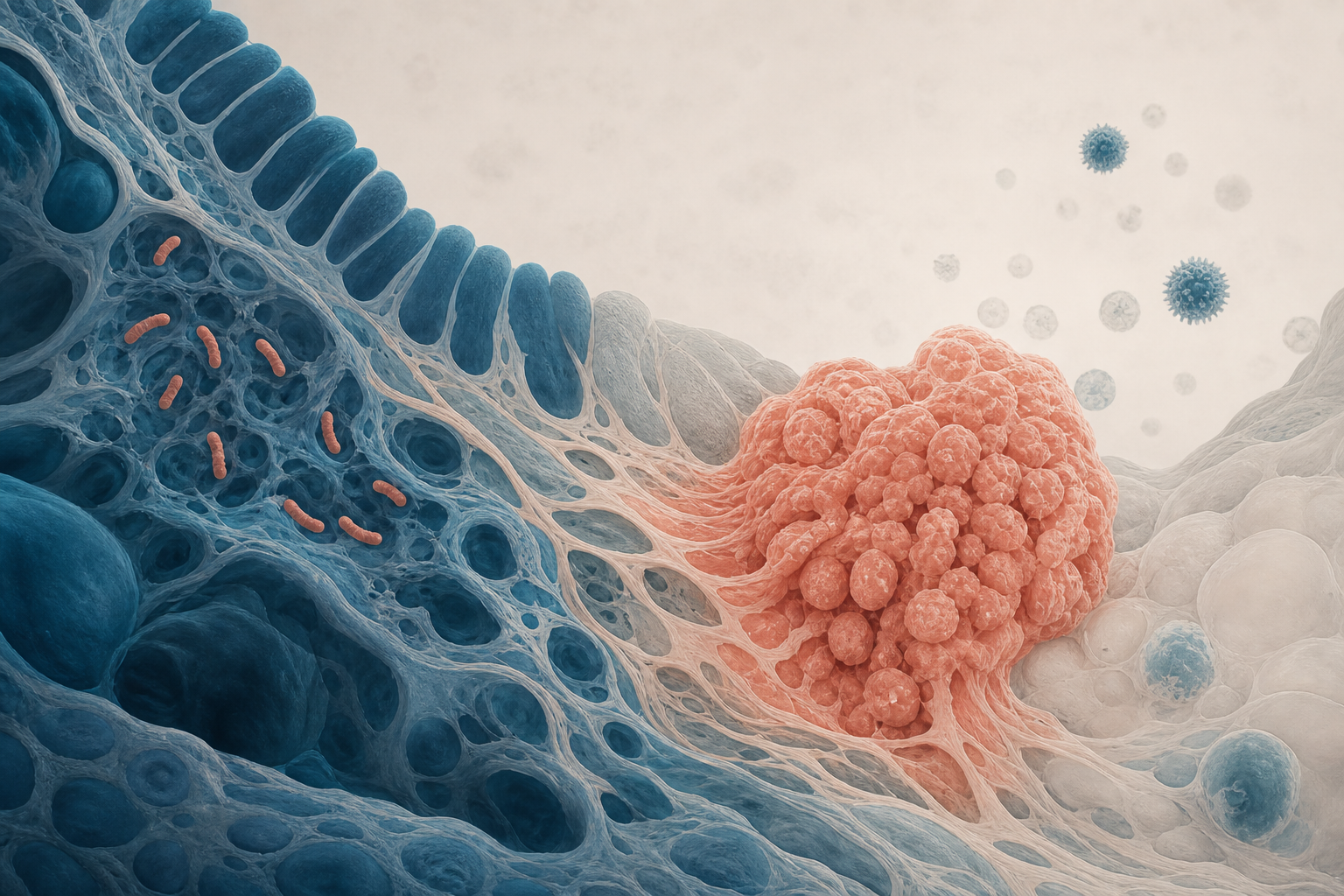
Tumour bacteria may mark a higher risk of recurrence
In 740 people with stage I to III colorectal cancer, tumours containing Fusobacterium species were associated with shorter recurrence-free survival after surgery, with an adjusted hazard ratio of…
-

Nutrition drinks were linked to fewer chemotherapy changes after surgery
In a 157-person randomised trial, chemotherapy modifications occurred in 17.5% of patients given oral nutritional supplements plus dietary advice, versus 35.1% given dietary advice alone. Five-year all-cause mortality…
-
Short radiotherapy and chemotherapy improved five-year survival in rectal cancer
At five years, overall survival was 78.1% with short-course radiotherapy followed by chemotherapy, compared with 69.7% with long-course chemoradiotherapy, HR 0.739 (95% CI 0.550 to 0.993). Disease-free survival…
-
Bevacizumab triplet had 0.99 probability of top surgical-conversion ranking
Across seven randomised trials in initially unresectable colorectal liver metastases, bevacizumab plus triplet chemotherapy ranked highest for disease control and conversion to R0-1 surgery. That ranking drew partly…
-

Tislelizumab regimen reached 45.3% pathological complete response in rectal cancer
In this 118-patient randomised phase II trial, adding tislelizumab to short-course radiotherapy and CAPOX chemotherapy was associated with a higher pathological complete response rate than the same treatment…
-

First-line immunotherapy reduced progression hazard 39% in MSI-H metastatic colorectal cancer
A meta-analysis of two randomised phase III trials found longer progression-free and overall survival with first-line checkpoint-inhibitor therapy than chemotherapy in MSI-H/dMMR metastatic colorectal cancer. The evidence is…
-

The saliva microbiome might help detect early-onset colorectal cancer.
In a prospective cohort of 128 people, a machine-learning model using saliva bacteria distinguished people with early-onset colorectal cancer from healthy controls with an AUC of 0.780. This…
-
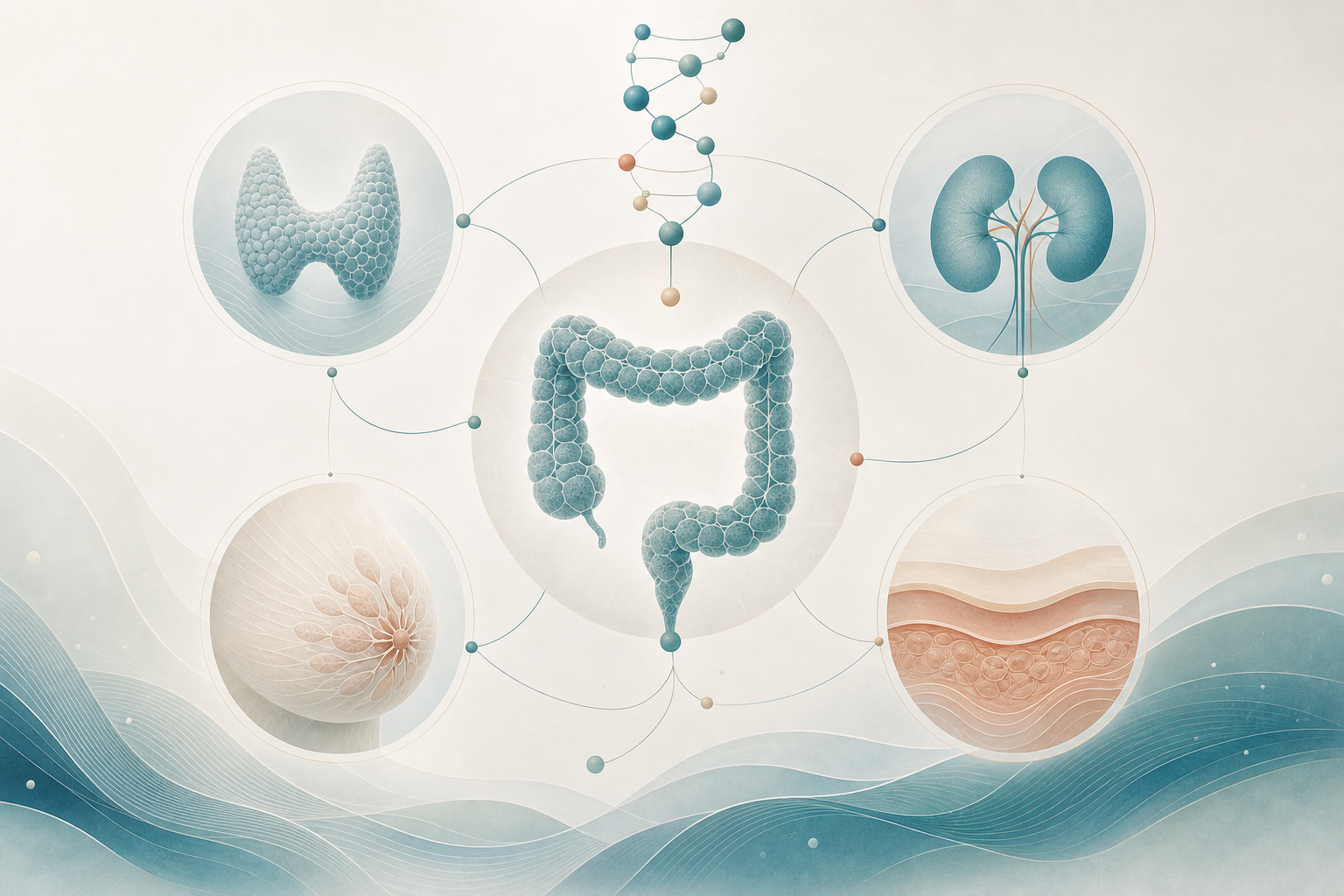
Updated PHTS surveillance guidance includes colorectal cancer, but evidence remains limited
This ERN GENTURIS expert guideline updates cancer surveillance advice for people with PTEN hamartoma tumour syndrome, including colorectal cancer surveillance. It is based on a literature review and…
Keep up with the research
New colorectal cancer research, screened and explained in plain language, sent when there is something genuinely worth reading. Roughly monthly, never more than that.
One email when there is something worth reading, usually monthly. No advertising, no selling your address, unsubscribe in one click.