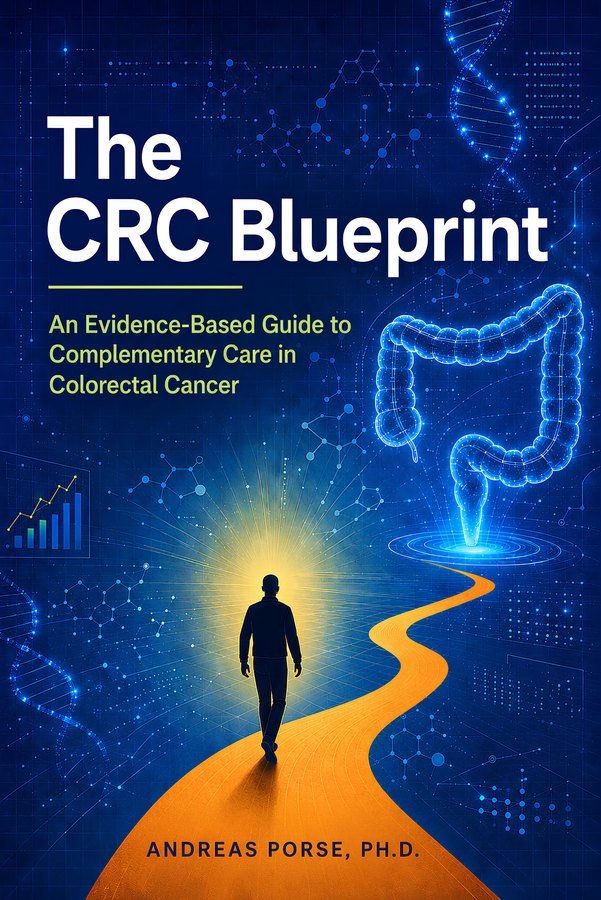
The book
The Colorectal Cancer Blueprint
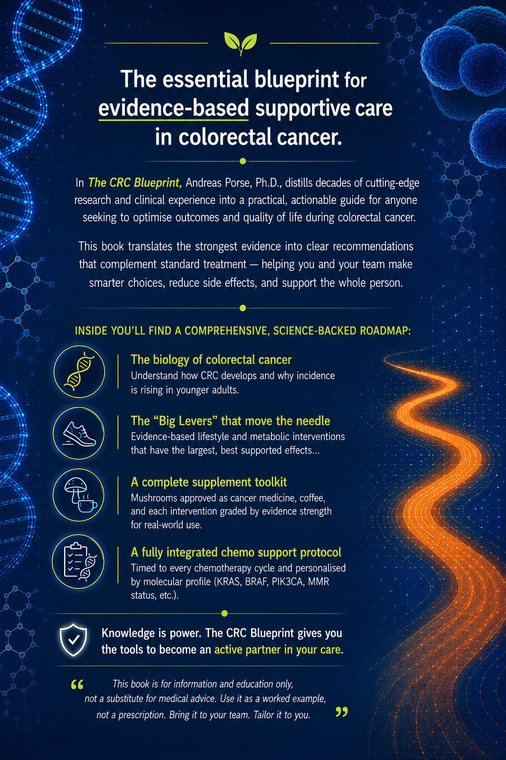
An evidence-based guide to complementary care in colorectal cancer. 31 chapters, more than 360 peer-reviewed studies, and over 60 illustrations and graphs.
Most people leave surgery and chemotherapy without being told that diet, exercise, supplements and a handful of common pharmacy drugs can move their recurrence risk. This book closes that gap. Every recommendation carries a grade for evidence quality, effect size and safety, and where the evidence is weak it says so plainly.
It will not replace your oncology team. It will give you the vocabulary, the evidence and the practical protocols to be an active partner in your own care.
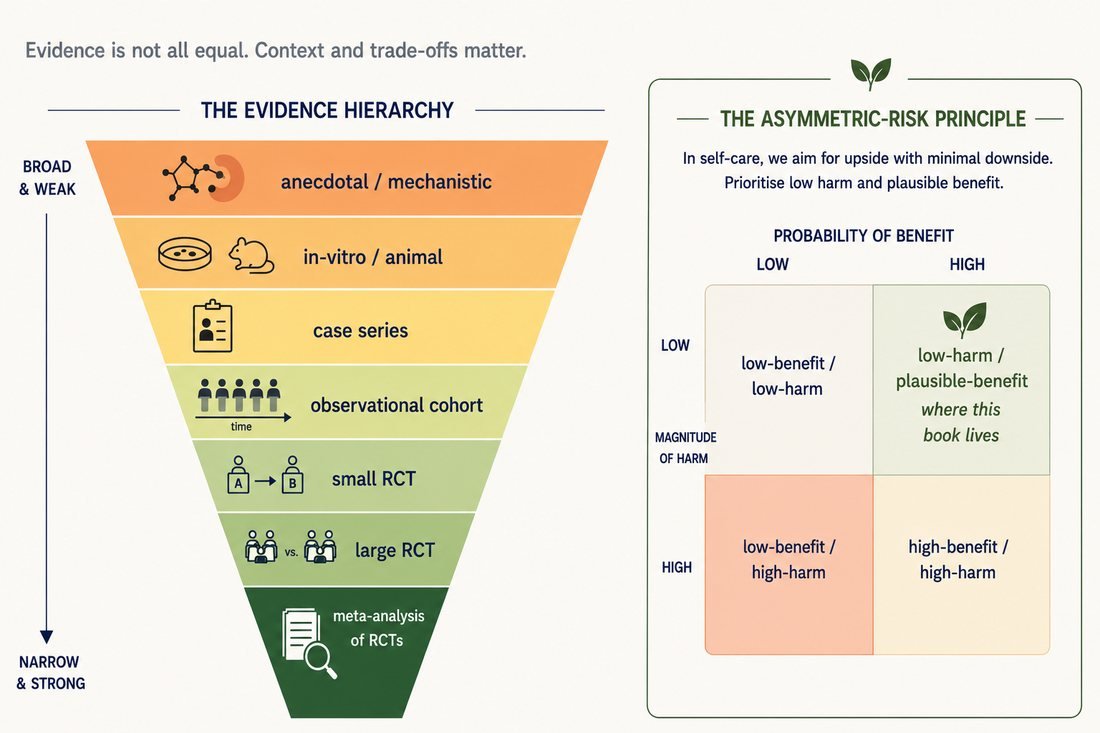
How the evidence is weighed
Not all evidence is equal, and a mechanism in a dish is not a result in a person. The book sorts every claim by where it sits on the evidence hierarchy, then asks a second question that most cancer writing skips: what is the worst that happens if this is wrong? The answer is why the book concentrates on the low-harm, plausible-benefit quadrant and leaves the rest alone.
Every intervention chapter then opens with the same three ratings, so you can judge in seconds whether something deserves your time and money:
- Evidence quality High
- Effect size in CRC Medium
- Safety Very high
Inside the book
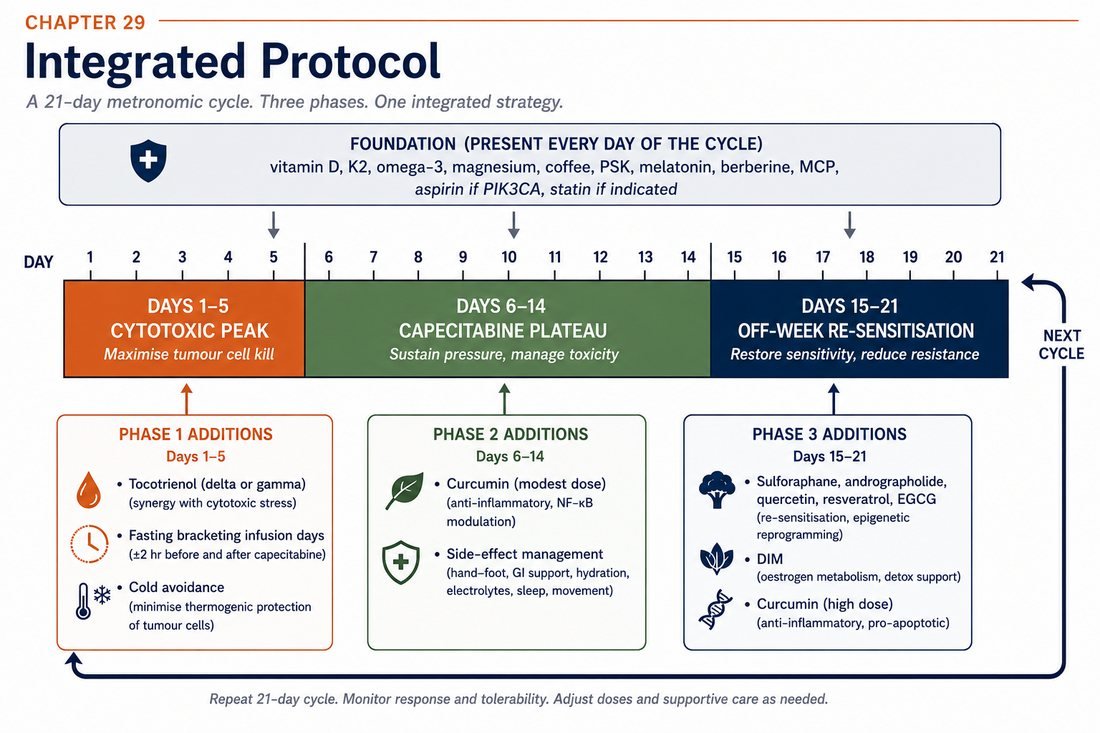
Part IV turns everything before it into a schedule. Chemotherapy is not one continuous state: a 21-day CAPOX cycle has a cytotoxic peak, a fluoropyrimidine plateau and a recovery window, and what helps in one phase can work against you in another. The protocol chapter maps each intervention to the phase where it belongs.
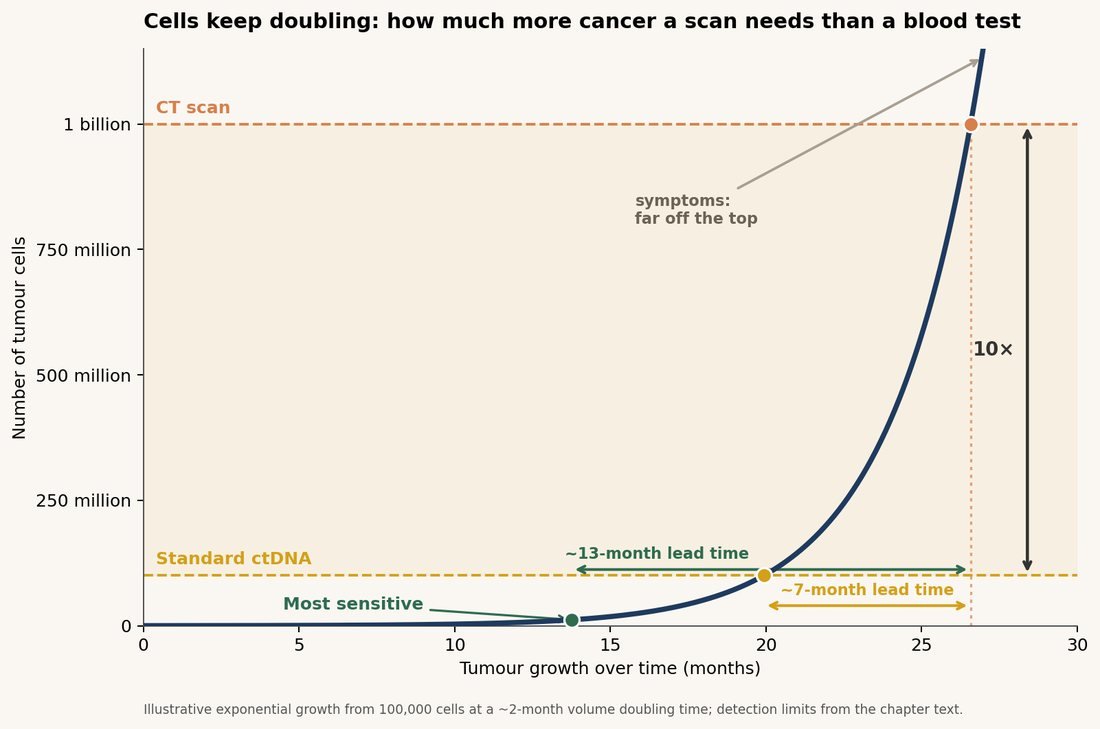
The final chapters cover monitoring. Circulating tumour DNA can flag a recurrence months before a scan can see it, and the reason is arithmetic: a blood test can detect a tumour roughly ten times smaller than the one a CT scanner needs.
Read a chapter, free, right now
No email required. This is Chapter 6, Exercise and Colorectal Cancer, exactly as it appears in the book: 15 pages, three figures and 21 references. I picked it because it carries the strongest evidence in the whole book, a randomised trial showing that structured exercise cuts the risk of death after colon cancer by 37%.
Get the book
The PDF is pay what you want, and that includes nothing at all.
I wrote this while having chemotherapy myself, and I know what a diagnosis does to a household budget. If money is tight, set the price to zero and take the book with my blessing. It is the same complete book either way.
If you are able to pay something, it genuinely helps. It covers the research subscriptions and the running costs of this site, and it pays for the next edition as the evidence moves. Whatever you think it was worth is the right amount.
Prefer to read on a Kindle, or want it in print? Both are on Amazon:
Contents
Part I: Setting the Stage
- 1My Story
- 2The Rise of Early-Onset Colorectal Cancer
- 3Colorectal Cancer 101: From Biology to Treatment
- 4The Invisible Ecosystem: How Your Gut Microbiome Shapes Colorectal Cancer
- 5The Case for Informed Self-Care
Part II: The Big Levers
- 6Exercise and Colorectal Cancer
- 7Diet and Colorectal Cancer
- 8Fasting and Fasting-Mimicking Diets
- 9Vitamin D
- 10Stress, Sleep, and Circadian Biology
- 11Avoiding Hyperglycaemia and Hyperinsulinaemia
Part III: The Supplement Toolkit
- 12Building a Supplement Strategy
- 13PSK (Polysaccharide-K)
- 14Omega-3 Fatty Acids (EPA/DHA)
- 15Coffee and Colorectal Cancer
- 16Delta- and Gamma-Tocotrienol
- 17Berberine
- 18Sulforaphane
- 19Andrographolide
- 20Curcumin
- 21Vitamin K2 (MK-4)
- 22Resveratrol
- 23The Flavonoid Family
- 24Diindolylmethane (DIM) and Indole-3-Carbinol
- 25Melatonin
- 26Supporting Players: Other Foods and Supplements Worth Considering
- 27Repurposed Drugs in Colorectal Cancer
Part IV: Putting It All Together
- 28Sensitising CRC Chemotherapy and Minimising Its Side Effects
- 29An Integrated Protocol for CRC Chemotherapy
- 30Monitoring and Adapting: The Promise of Circulating Tumour DNA
- 31A Note on Hope and Honesty
Keep up with the research
New colorectal cancer research, screened and explained in plain language, sent when there is something genuinely worth reading. Roughly monthly, never more than that.
One email when there is something worth reading, usually monthly. No advertising, no selling your address, unsubscribe in one click.